
Life before death
How The Stormlight Archive changed my perspective on life.
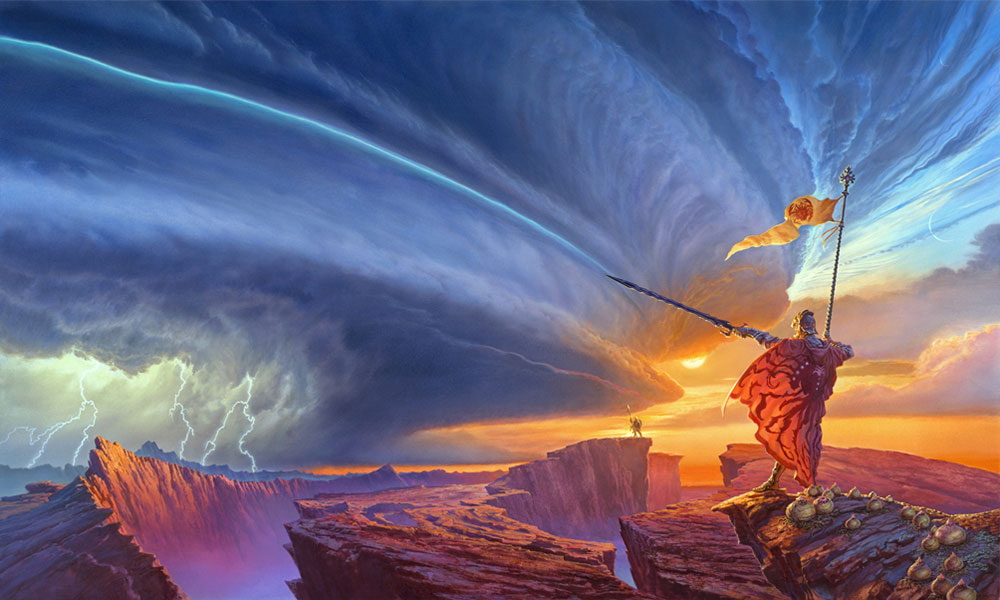
Featured Image: The Way of Kings, by Michael Whelan.
A book has to have depth for me to enjoy it. For a book to be one of the greatest I’ve read, it has to add to my morals, make me question my own personal philosophies and stay in my thoughts for a considerable amount of time after having read the book. It has to change my perspective on life. The Stormlight Archive, by Brandon Sanderson are those books for me.
Reading has become a very meaningful part of my life. It is a hobby I picked up more than two years ago and I would’ve never expected books to add so much value to my life. The Stormlight Archive has taught me many life changing lessons.
I am about to be a first year psychology student in 2026, and although I didn’t know I wanted to be a psychologist when I first read these books, now looking back at them, I can’t help but think about how grateful I should be that I read them when I did. Not only did it add immense substance to my life, but I think what I found in these books will be beneficial for my studies.
In this entry, I want to talk about some of the things I love from this series, how it helped me and how it added value to my life. This is quite a long post, but I put a lot of time into this and I can’t help but be proud of my first entry. I hope you enjoy my perspective of this story, but remember:
“The purpose of a storyteller is not to tell you how to think, but to give you questions to think upon. Too often, we forget that.” – The Way of Kings


The Way of Kings cover, by Michael Whelan.
I have only read the first three books in The Stormlight Archive, The Way of Kings, Words of Radiance and Oathbringer. I must still complete Rhythm of War and Wind and Truth. I tried my best to not go into spoilers in this post, as I want this to be accessible by a wider audience and to hopefully encourage you to read the books if you haven’t already. That being said, there are some “minor spoilers” in the form of quotes from the books, or me describing a character. In the rare case of spoilers regarding the plot of the books being mentioned, I always indicated ahead of time.
Brandon Sanderson describes what the first book, The Way of Kings, is about better than I ever could, so I highly encourage you to go check it out.
Here is the synopsis from the cover flap:
“Widely acclaimed for his work completing Robert Jordan’s Wheel of Time saga, Brandon Sanderson now begins a grand cycle of his own, one every bit as ambitious and immersive.
Roshar is a world of stone and storms. Uncanny tempests of incredible power sweep across the rocky terrain so frequently that they have shaped ecology and civilization alike. Animals hide in shells, trees pull in branches, and grass retracts into the soilless ground. Cities are built only where the topography offers shelter.
It has been centuries since the fall of the ten consecrated orders known as the Knights Radiant, but their Shardblades and Shardplate remain: mystical swords and suits of armor that transform ordinary men into near-invincible warriors. Men trade kingdoms for Shardblades. Wars are fought for them, and won by them.
One such war rages on a ruined landscape called the Shattered Plains. There, Kaladin, who traded his medical apprenticeship for a spear, has been reduced to slavery. In a war that makes no sense, where ten armies fight separately against a single foe, he struggles to save his men and to fathom the leaders who consider them expendable.
Brightlord Dalinar Kholin commands one of those other armies. Like his brother, the late king, he is fascinated by an ancient text called The Way of Kings. Troubled by overpowering visions of ancient times and the Knights Radiant, he has begun to doubt his own sanity.
Across the ocean, an untried young woman named Shallan seeks to train under the eminent scholar and notorious heretic Jasnah Kholin, Dalinar’s niece. Though she genuinely loves learning, Shallan’s motives are less than pure. As she plans a daring theft, her research for Jasnah hints at secrets of the Knights Radiant and the true cause of the war.
The result of more than ten years of planning, writing, and worldbuilding, The Way of Kings is but the opening movement of the Stormlight Archive, a bold masterpiece in the making.
Speak again the ancient oaths,
LIFE BEFORE DEATH.
STRENGTH BEFORE WEAKNESS.
JOURNEY BEFORE DESTINATION.
and return to men the Shards they once bore.
The Knights Radiant must stand again.“
THE OATHS
In the books, there are ideals that the Knights Radiant live by. Each Radiant has different oaths they have to swear, but the first ideal, the first oath, is the same for all. That is:
“Life before death, Strength before weakness, Journey before destination.”
I love the summary from theThe Stormlight Archive Wiki about them:
- Life before death – The Radiant seeks to defend life, always. He never kills unnecessarily, and never risks his own life for frivolous reasons. Living is harder than dying. The Radiant’s duty is to live.
- Strength before weakness – All men are weak at some time in their lives. The Radiant protects those who are weak, and uses his strength for others. Strength does not make one capable of rule; it makes one capable of service.
- Journey before destination – There are always several ways to achieve a goal. Failure is preferable to winning through unjust means. Protecting ten innocents is not worth killing one. In the end, all men die. How you lived will be far more important to the Almighty than what you accomplished.
Life before death, because living is harder than dying. Strength before weakness, because being strong is harder than being weak. Journey before destination, because the journey is harder than the destination.
This was one of my first interpretations, but it’s more than just that. It’s about the importance.
Living is more important than dying. Death is inevitable. Strength is more important than weakness. Weakness is inevitable. The journey is more important than the destination. The destination is inevitable. The more important thing, oftentimes, ends up being the harder thing to do. The harder choice to make.
This brings me to some of my favourite quotes from the series:
“The question is not whether you will love, hurt, dream, and die. It is what you will love, why you will hurt, when you will dream, and how you will die. This is your choice. You cannot pick the destination, only the path.” – Oathbringer
It does not matter that you will die, what matters is how you choose to live. Everyone will be weak at some point in their lives. It doesn’t matter how you fall, what matters is how you get back up. We all have the same ultimate destination, but to truly love the journey is to accept that it does not end.
The journey is what you will love, why you will hurt, when you will dream and how you will die. Everything you love, all the pain you will feel and all of the dreams you will dream is who you are. The journey is who you are, the way in which you live.
Me and my psychologist have a shared journal that we use for my therapy. I wrote down a lot of quotes I liked from this series in there and he wrote down saying that it reminded him of some psychological principles. One of them, he called “Process vs Outcome.” He said that as human beings, we tend to have the flaw of being outcome oriented, but that’s not where the value lies. The value lies in the process.
“He must not become so focused on what he wishes to accomplish that he diverts his gaze from the path he must take to arrive there.” – The Way of Kings
I used to look at my life in milestones and I had moments when I’ve solely focused on the outcome I wanted. It shook me when things happened and it was not like how I thought it would be, and I didn’t feel like how I thought I would feel. What I truly wanted, did not wait for me in the future, it could only be produced in the present. You can’t pick a date and say “that’s when I’ll start living.” You just have to realize that you are already living now. Life comes from you, not at you. Sometimes, that can be a very daunting realization.
So, I have since decided that I will no longer live my life in anticipation of the future. Of the destination. I will only live for now, for the journey. The journey that does not end.
“And so, does the destination matter? Or is it the path we take? I declare that no accomplishment has substance nearly as great as the road used to achieve it. We are not creatures of destinations. It is the journey that shapes us. Our callused feet, our backs strong from carrying the weight of our travels, our eyes open with the fresh delight of experiences lived.” – The Way of Kings
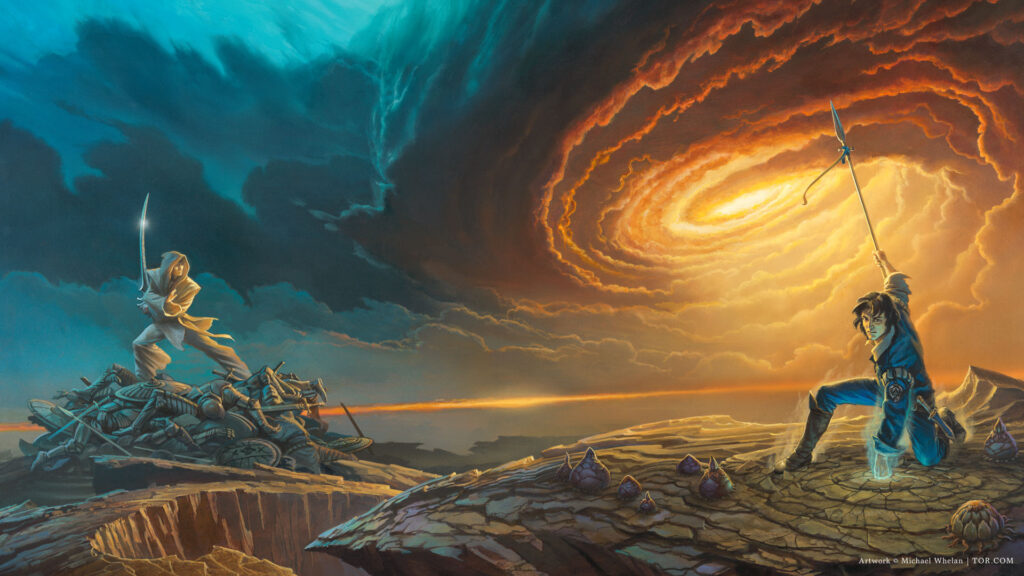
Words of Radiance cover, by Michael Whelan.
CONFRONTATION
“It becomes the responsibility of every man, upon realizing he lacks truth, to seek it out.” – Oathbringer
All of my favourite characters in books, oftentimes, have one main characteristic in common. That is confrontation, their ability to confront themselves. What I admire the most about them, is that they are all willing to look at themselves in the mirror. That they are able to face all of their wrongs, shames and hurt honestly.
It takes a lot of courage, bravery and determination to be able to do it. Most people can’t. It can be a very daunting task to do, but I would argue that it is the most important and beneficial task that you can do for yourself. The task of self-realization.
“Have you ever come to the sudden realization that you are not the man everyone thinks you are?”
“Yes. More daunting, however, are similar moments: when I realize I’m not the man I think myself as being.” – Oathbringer
SPOILER WARNING: I am going to talk a bit about a character, Dalinar, and mention some of his development in the series. I won’t go into much detail, if you prefer to read this portion, you can continue below:
You have been warned.
As we learn in the synopsis, Dalinar commands one of the armies on the Shattered Plains. He is in his 50’s and because of that, he has a very long history that we explore a lot in Oathbringer. When he was younger, he had a reputation for being a brute, barbaric, hot-headed and a bit mad. He was fighting in a lot of wars for his brother to be recognized as King.
During those wars, he hurt and killed a lot of people. He was involved in the death of someone very close to him, amongst other individuals as well. Dalinar starts to struggle with his guilt, but he pushes it away. Instead, he tells himself that it’s not his fault, that he didn’t have a choice. He tells himself that he did what he thought was best, that he tried to stop it, but it was too late.
Eventually, guilt and pain consumes him. He seeks out a way to get rid of his pain and to be forgiven. That is what leads him to losing some of his memories regarding the severity of his actions.
Dalinar starts to change. No longer having the memories of his wrongs and shames, he starts to live a life where he is a noble man. He is no longer a war hero, but rather a peace keeper. People start to criticize him for his change. They call him a hypocrite, because he has different beliefs. Because he changed.
Slowly, Dalinar’s memories start to come back to him and he starts to remember every horrid thing he was involved with. The guilt and pain starts to return, and he starts thinking that maybe he hasn’t changed at all. Maybe he is just pretending. Maybe he is still immoral. Maybe he is a lie. Maybe, he is a hypocrite.
“But sometimes a hypocrite is nothing more than a person who is in the process of changing.” – Oathbringer
The story comes to a halt when it’s been revealed to Dalinar that there was something influencing his emotions during those events. He is told that it was not his fault, that he was made to do those things. Dalinar then breaks down, crying, and says: “You cannot have my pain.”
He starts to take responsibility for his actions. He says that he might have been influenced, but he still made the choice. He still made the decision. He says that he did kill those people. That it hurts so much, but he did it and he accepts that. He says that if he pretends he didn’t do those things, then it means he can’t have grown to become someone else.
Dalinar accepts his pain, because it’s his own to learn from and to come back from.
“For I, of all people, have changed.” – Oathbringer
For there to be a journey, there has to be a beginning. Everyone has to start somewhere. Although a journey might not necessarily have an ending, it will always have a beginning. You will never stop changing and growing. It can be painful to face the truth of knowing that you hurt someone, or that it was your own fault for hurting yourself. But accepting yourself and changing for the better, is the most bravest, and the most admirable thing you can do. You just have to be willing to look.
“A journey will have pain and failure. It is not only the steps forward we must accept. It is the stumbles. The trails. The knowledge that we will fail. That we will hurt those around us. But if we stop, if we accept the person we are when we fall, the journey ends. That becomes our destination. To love the journey is to accept no such end” – Oathbringer
Once you look at yourself and change . . . There is no other feeling like it. I cannot describe to you the feeling of wholeness you’ll experience. It’s like you can finally breathe. Like you’ve been asleep all this time and finally, you’re awake. Once you fully accept yourself, once you finally realize yourself, you will feel complete. I know, because I am finally starting to look at myself as well. I have been changing too.
Change is not meant to be easy. It is a very uncomfortable, unsure, sometimes scary process. Sometimes, when you look too deep into yourself, it feels like you’ve been cut open. When I first started therapy, a lot of my earlier sessions felt like that, sometimes they still do. It feels like I’ve been ripped open and as time passes after having had my session, the wound slowly starts to close until I feel okay again. That is part of the process.
Sometimes, it really hurts. Most of the time, it happens without you even realizing its happening. Then, you get to a point in your journey and you can’t help but realize how much you’ve changed and you can’t ignore how far you’ve come. And that moment, when you first start to realize that you’re changing, it is the most delightful feeling in the world. All of a sudden, every hardship you’ve had to endure feels worth it, because the reward feels that blissful. It makes you never want to stop growing.
“He’d once believed he had been four men in his life, but now he saw he’d grossly underestimated. He hadn’t lived as two, or four, or six men – he had lived as thousands, for each day he became someone slightly different. He hadn’t changed in one giant leap, but across a million little steps. The most important one always being the next.” – Oathbringer
Dalinar has become one of my favourite characters for this reason. I admire him, for his bravery to acknowledge his pain, to accept it and to change. That from then on, should he fall, he would rise each time and be a better man. It makes me want to continue doing the same.
“You live lies. It gives you strength. But without speaking the truth . . . Without speaking truths you will not be able to grow.” – Words of Radiance
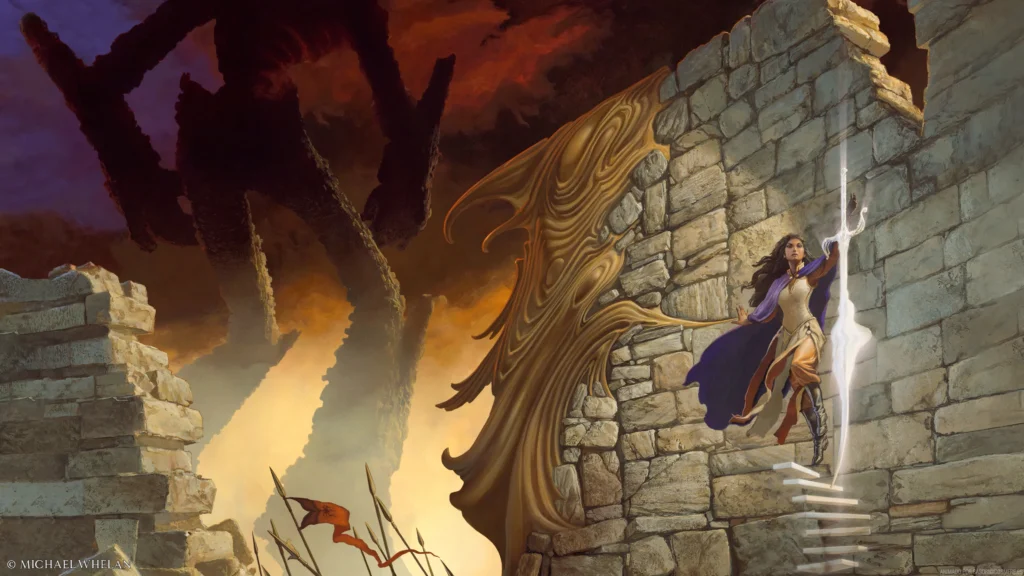
Oathbringer cover, by Michael Whelan.
MENTAL HEALTH
“If we can choose, we can change. If we can’t change, then choice means nothing. I’m glad I feel this way, to remind me that I haven’t always felt the same. Been the same.” – Rhythm of War
I really liked the mental health representation in the books, and since this will one day be my area of expertise, it’s something I’d like to touch on. Obviously, I am no professional yet, but I like to think that I have a good grasp on topics like mental health, having dealt with it a lot during my life. There is no better way to learn and understand, than through lived experience.
I have often felt the way these characters have felt, only I have not been able to describe how I feel as eloquently as Brandon Sanderson has. Even though our reasons were different, a lot of the feelings were the same. When I’ve experienced hard times, it used to always feel a bit confusing. My “hard times” would consist of anxiety and depression. It used to be very difficult for me to articulate how I feel, while grappling with very big and overwhelming emotions.
I think what I appreciated the most from the series in this regard, was the clarity it provided me with. Brandon Sanderson described the feelings I felt in such an accurate and thoughtful way. It helped me to understand what I felt, because I didn’t have the words. It helped me articulate my feelings to myself, and in turn I no longer felt so confused and a little less lonely. It also made it a lot easier for me to describe my feelings to other people, all because Brandon Sanderson wrote characters that I could relate to. That I could see myself in.
At times, it was difficult for me to read the books when a character was doing bad, but I think that had more to do with me, rather than the series itself. I had started with the fourth book, but another one of my favourite characters, Kaladin, also started to struggle a bit and I decided to take a break from reading. It upset me a lot that I had to stop. I knew that I would’ve found something very impactful to me and that it would’ve helped me so much, I can already tell by some of the quotes I’ve seen from Rhythm of War.
Every character will struggle with their mental health at some point in the series, but in this entry I want to focus specifically on Kaladin, who appears to have chronic depression. Depression is not one of my current problems, but I’ve experienced it in the past and I’ve always felt very seen in the representations of depression. I think it’s described in a way that would perfectly reflect what you could feel when you’re in that mindset, depending on how it manifests for you.
The carelessness is there, the lack of feeling. The indifference:
“And now, here he was, in an even worse situation than where he’d begun. It was better not to resist. This was his lot, and he was resigned to it. There was a certain power in that, a freedom. The freedom of not having to care.” – The Way of Kings
Forgetting times when you’ve been happy in the past. Struggling to remember anything good that has ever happened and convincing yourself that there is no good in the future:
“He felt good lots of days. Trouble was, on the bad days, that was hard to remember. At those times, for some reason, he felt like he had always been in darkness, and always would be.” – Oathbringer
And then, once you finally overcome the indifference, or the sadness, or feeling like everybody hates you, you start to feel a little bit better, but now there’s a fear of regression and of the future, because “feeling better” is unfamiliar:
“Scared to go onward, but terrified to go back to what you were.” – The Way of Kings
Kaladin going through all of that and still choosing strength over weakness, was so encouraging to see. Sometimes, it’s difficult to care, and to remember, and to go onward. But he still did it anyway.
“Accept the pain, but don’t accept that you deserved it.” – Oathbringer
He still kept on fighting and he still kept on hoping, even when it seemed worthless. Reading about him, you can’t help but root for him, so why shouldn’t I be rooting for myself as well? Every time I care, and remember, and go onward, I should feel heroic as well.
“I don’t know what the point is, but it seems pathetic to give up. We should keep fighting. Right until those arrows take us. You know, ‘journey before destination’.” – The Way of Kings
Even though Kaladin chose to keep on fighting, there was a rhetoric that he is only strong because of all of the hardships he was put through. I do somewhat think that your experiences shape you, but I will not give my circumstances credit for the person I am today and I was delighted when Kaladin did the same.
“Ten spears go to battle, and nine shatter. Did that war forge the one that remained? No, Amaram. All that war did was identify the spear that would not break.” – Oathbringer
I disagree with the notion that everything bad you go through is meant to make you stronger. If I find strength in a bad situation, that does not mean that the situation made me strong. All it did was show me my own strength, that was always within me. It’s always good to see the silver lining in bad situations, but you simply do not need to traumatize yourself to be strong. You are strong, because you were born strong.
I really appreciated that Kaladin is represented as so much more than just his depression. I think a lot of the time it can be very easy for someone to be seen for just their struggles with their mental health, like that’s all that they get reduced to. But Kaladin’s depression doesn’t define him. He is seen for who he is, beyond his struggles with depression. He is one of my favourite characters, not because of his depression, but because I like who he is as a person.
“The captain seemed intimidating to many outsiders. A perpetual storm for an expression, an intensity that made men wilt when it turned on them. But there was also an astonishing tenderness to this man . . . Some days, it seemed you couldn’t break Kaladin Stormblessed with all the stones in Roshar. Then one of his men would get wounded, and you’d see him crack.” – Oathbringer
I wanted to end this portion of the post by saying that Brandon Sanderson has spent years researching everything that is talked about in his books, regarding mental health. I was recently made aware that it’s apparently considered “controversial” by some psychologists to discuss mental health in things like fictional books, movies, tv shows, etc. I understand where they are coming from, I agree that mental health is oftentimes misrepresented in the media, but I do not feel that this is the case with Brandon Sanderson.
I think the descriptions of mental health in these books are accurately portrayed, it is not glamourized or grotesque. I think every topic touched upon is written with care, and I’ve always felt the advice the characters are given is very thoughtful and sincere. That advice has helped me a lot too.
Even though Brandon Sanderson has never struggled with mental health himself, he is surrounded by people in his life that he cares about, who do struggle with mental health. As I previously said, he has spent years researching mental health so that he can understand, not just to accurately portray it in his books, but to understand the people he loves.
Brandon Sanderson does a podcast, Intentionally Blank, with Dan Wells and they’ve done two episodes together talking about their experiences with mental health, especially Dan who opens up about his experience with depression and anxiety.
Definitely go watch it if you are interested. I believe anyone should be allowed to research mental health and be able to share their findings in any form they want, so long as it does no harm. Brandon Sanderson lives through telling stories. His stories are very meaningful and I will always be grateful that he chose to represent mental health in them.
“It will (get worse), then it will get better. Then it will get worse again. Then better. This is life, and I will not lie by saying every day will be sunshine. But there will be sunshine again, and that is a very different thing to say. That is truth. I promise you, Kaladin: You will be warm again.” – Rhythm of War
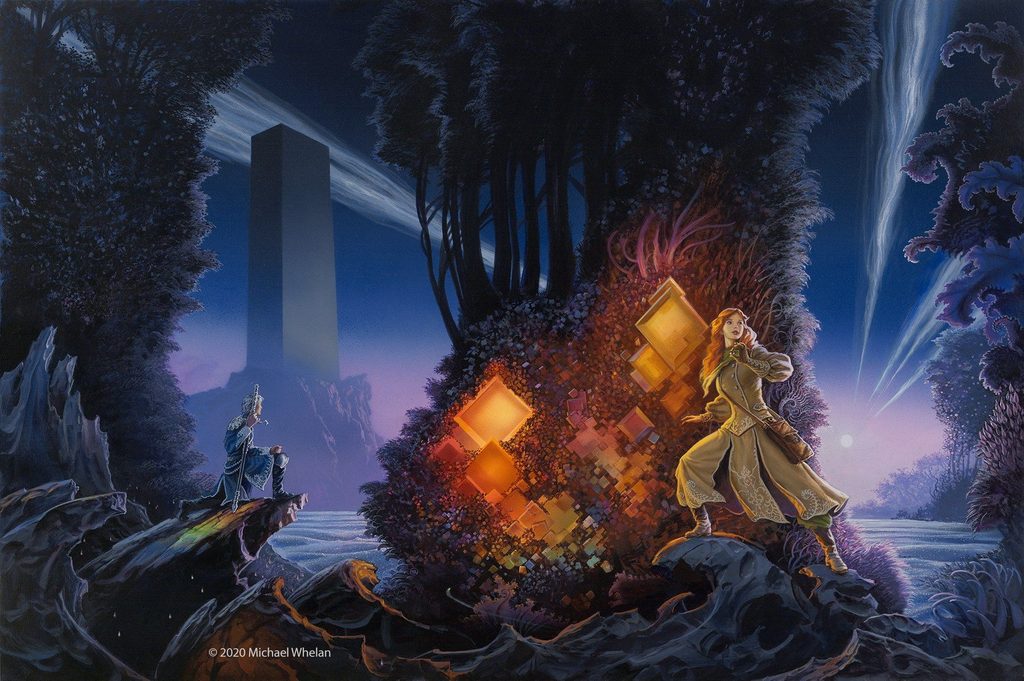
Rhythm of War cover, by Michael Whelan.
DOING WHAT’S RIGHT
“Somebody has to start, son. Somebody has to step forward and do what is right, because it is right. If nobody starts, then others cannot follow” – The Way of Kings
The moral high ground from The Stormlight Archive is something that I love tremendously. I commend my favourite characters’ willingness, all from different backgrounds, choosing to do what is right simply because it is right. I admire their maturity to do it and their hope for peace, for a better world.
“Now we either learn together or we fall individually.” – Oathbringer
Somebody has to start. Somebody has to be the bigger person, set the example and lead. If nobody can set their pride aside, then nothing will ever change for the better. It is so refreshing to witness this in the books, because it is so different from our real world. In its essence, nobody should need a reason to do what is right, other than it being the right thing to do. It shouldn’t be an exchange and it shouldn’t be conditional.
When you choose to do what is right, you choose to do it even when it costs you or when life might feel unfair. Right doesn’t stop being right just because it might be inconvenient. If everybody waits for permission to be good, nobody will be.
“The means by which we achieve victory are as important as the victory itself.” – The Way of Kings
Should we be willing to do anything to achieve our goals? Should we be willing to lie, cheat and steal to get where we want in life? Should we be willing to break any rules, hurt anyone, so long as we get what we desire?
“The longer you live, the more you fail. Failure is a mark of a life well lived. In turn the only way to live without failure is to be of no use to anyone.” – Oathbringer
I do not think it is wise to say that you want something that much, that you’re willing to lose all morality in the process. In doing so, you’re shooting yourself in the foot, because it will backfire in some way, whether that be emotionally or in a physical form. I find it more admirable to still want whatever it is you want, but to rather risk failure than lose your integrity. As journey before destination says: “Failure is preferable to winning through unjust means. How you lived will be far more important to the Almighty than what you accomplished.” Dalinar and Kaladins sense of honour was a big takeaway of mine and it is something I hope to embody in my real life.
“If I should die, then I would do so having lived my life right. It is not the destination that matters, but how one arrives there.” – The Way of Kings
The discussions around morality is something I find to be very thought provoking.
“Morality is not something you can simply doff to put on the helm of battle, then put back on when you’re done with the slaughter.” – Oathbringer
Morality is not something that you can just take off to do brutal things, and then put back on afterwards as if nothing happened. Those actions still define you and they still carry moral weight afterwards. Morality doesn’t stop applying just because a situation is brutal.
Life will not be easier just because you choose to do what is right, oftentimes it will be harder. But as I said at the beginning of this post, the harder choice to make, ends up being the more important thing to do. I believe making these choices lead to a more rewarding sense of life.
“You shouldn’t be looking for life to be easier because you choose to do what is right! Personally, I think life is fair. It’s just merely that often, you can’t immediately see what balances it out.” – Oathbringer
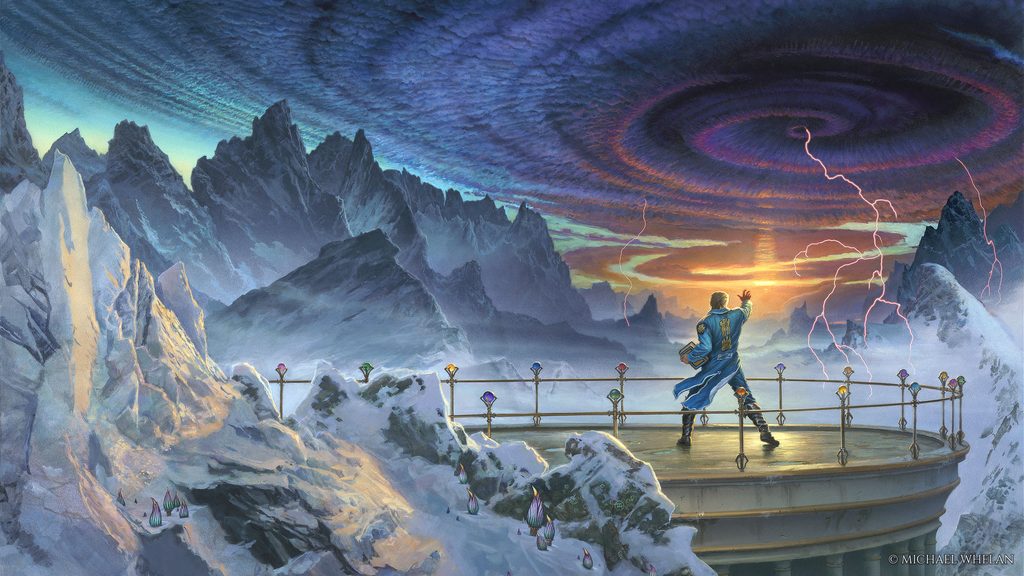
Wind and Truth cover, by Michael Whelan.
LACK OF EMPATHY
For my final writing point in this post, I want to talk about how the decline in reading is leading to a lack of empathy within society. I have already heard many people talk about this, and I agree with them that this news is concerning.
The closest I’ve ever gotten to feeling like I’m actually in someone else’s shoes and experiencing what they are experiencing, has been through reading. Reading is unlike any other form of media. When you’re reading a book, you are in the characters mind, you hear their thoughts and their feelings. You witness the story from a completely different perspective, because the format allows you to understand the character in a different way than you normally would watching a movie or a tv show.
People losing empathy causes them to be less compassionate and understanding, since they aren’t being exposed to ethical dilemmas without a clear “right” or “wrong”. They become less forgiving and unwelcoming of genuine change. It creates a narrative that holds people to unrealistic moral standards, which is ironic. I believe the creation of that narrative in itself is immoral.
Those who don’t read fiction seem to be under the impression that reading is a chore. If the only books I’ve read in my life were textbooks or self-help books, I would think so too. Reading fiction does not feel like a chore, you just might not have the right book. Once you start to read, eventually you’ll forget that you’re actually reading. You’ll start to imagine what the world looks like, what the characters look like, and the scenes playing out. It helps build your imagination. If you are capable of visualizing vividly, reading should be a very enjoyable experience for you and it’s a great way to build empathy.
Reading allows you to experience thousands of life times. There is nothing else like it, it is a truly human experience.
“One cannot apply logic as an absolute when human beings are concerned. We are not beings of thought only.” – The Way of Kings
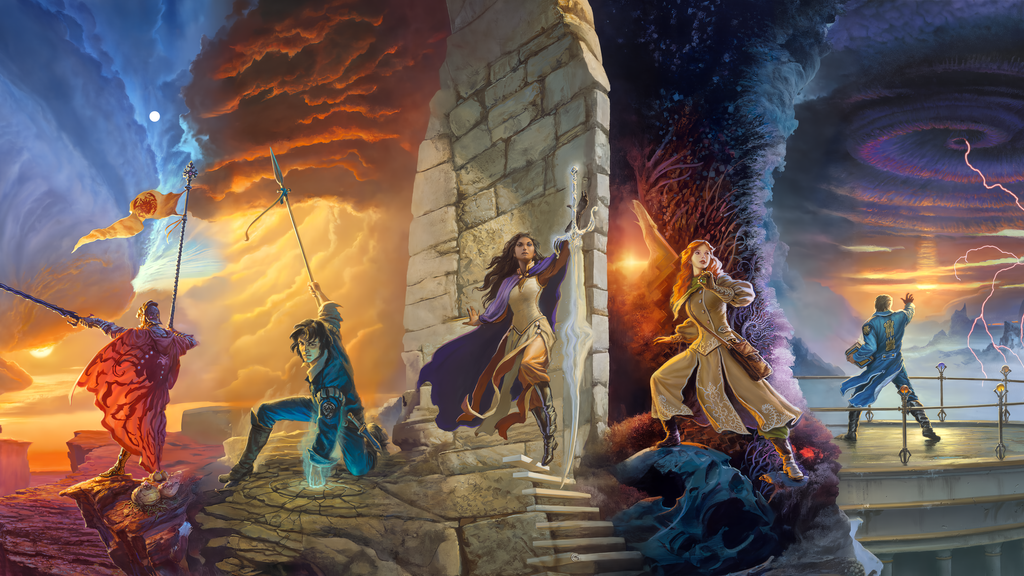
The Stormlight Archive covers, by Michael Whelan. Collage made by u/gjoux on Reddit.
If you read all the way to the end, thank you so much for reading my first blog post! I was not expecting it to be this long, but I had so much fun challenging myself to write this.
I truly love this series and I cannot wait to continue reading it. There are so many things I love about these books, too many to mention all in one post. I strongly encourage you to go read The Stormlight Archive if you haven’t already! Maybe you’ll find whatever it is you’re looking for too.
“People see in stories what they are looking for, my young friend.” – The Way of Kings
I plan to do many similar blog posts like these in the future about interesting things that I enjoy. Don’t hesitate to receive future entries from me!
Until next time, Avoeria.
Pingback: WHY DID I CHOOSE PSYCHOLOGY? – THE AVOERIA ARCHIVE
Fascinating!
This was quite a post. After my first go-around, I reread it aloud to my wife. Our compliments!
Wow! 😮 I loved your post! I read all the books that are out in that series and having read even three of those humongous encyclopedic monsters. And they’re awesome. I liked your section on empathy and what you wrote like, “They become less forgiving and unwelcoming of genuine change.” I’m looking forward to reading more of your posts!
Thanks a lot
Pingback: PROOF OF GOD – THE AVOERIA ARCHIVE
Wow, truly inspirational! Thanks for sharing. I haven’t read Brandon’s book yet, but since you’ve described it so eloquently, I’ll pick it up.
—-Shirley